Multi-Agent AI Frameworks Compared: CrewAI vs AutoGen vs LangGraph
Compare top multi-agent AI frameworks including CrewAI, AutoGen, LangGraph, Agno, and OpenAI Swarm to find the best fit for your project.
If you have been following AI development in 2026, you have probably noticed a pattern: multi-agent AI framework adoption is exploding. Some developers are even calling multi-agent AI “the new microservices” — a shift from monolithic single-model systems to specialized, cooperating agents that tackle complex problems together.
But with so many frameworks emerging, picking the right one can feel overwhelming. This guide breaks down the five most popular open-source multi-agent AI frameworks, compares their strengths and trade-offs, and helps you decide which one fits your use case.
TL;DR
- CrewAI is the most feature-rich option with 700+ integrations and a no-code studio — ideal for teams that want production-ready tooling out of the box.
- AutoGen (Microsoft) excels at enterprise-scale distributed agent networks with cross-language support.
- LangGraph offers fine-grained control through graph-based workflows — great for developers who need custom orchestration logic.
- Agno (formerly Phidata) is the fastest path from prototype to production with built-in UI and AWS integration.
- OpenAI Swarm is a lightweight experimental framework best suited for learning and prototyping.
If you just need a quick recommendation: start with CrewAI for production projects, LangGraph for complex custom workflows, and Agno for rapid prototyping.
What Is a Multi-Agent AI System and Why Does It Matter?
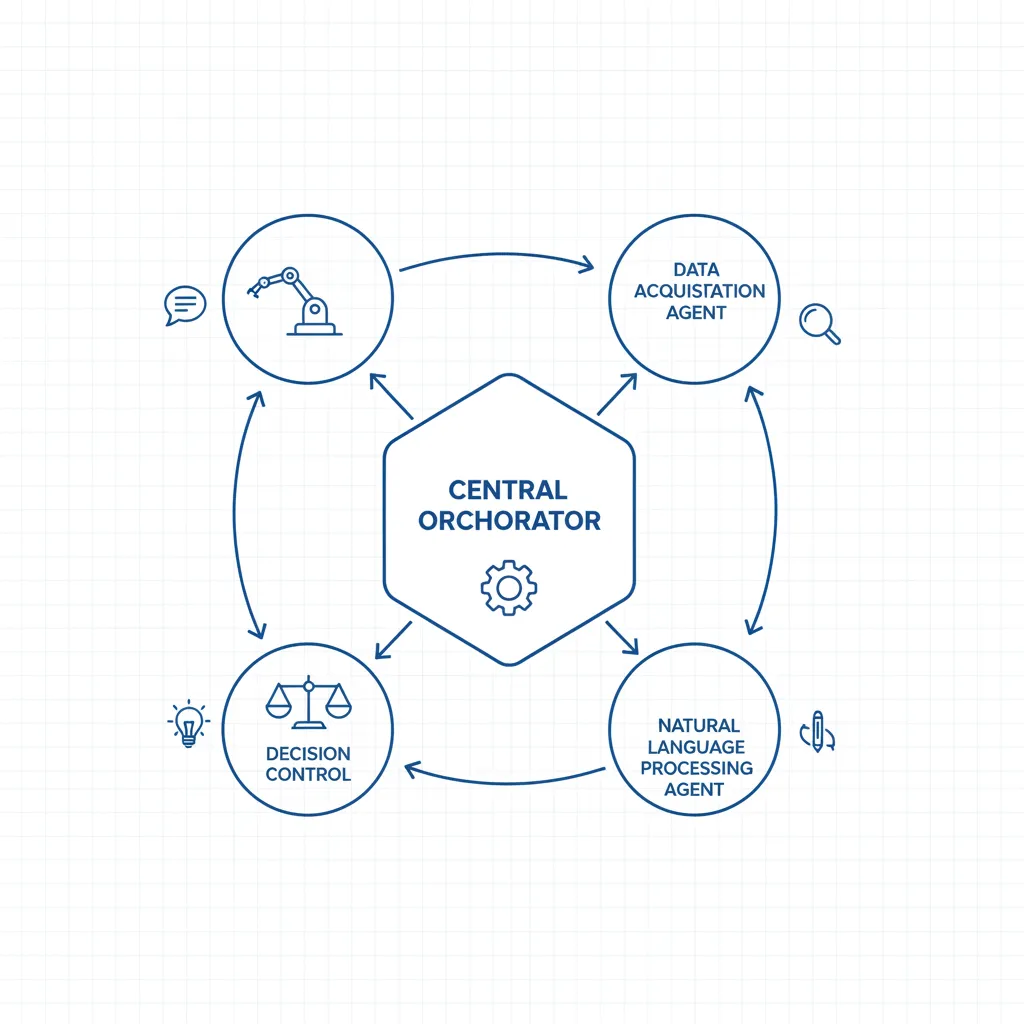
Before diving into frameworks, let’s clarify what a multi-agent AI system actually is. Instead of relying on a single large language model to handle everything, a multi-agent system splits work across multiple specialized AI agents that collaborate to solve a problem.
Think of it like a well-organized team. Each agent has a defined role (researcher, writer, reviewer), access to specific tools (web search, database queries, code execution), and a set of instructions. An orchestrator coordinates the team, routing tasks and merging results.
The Core Architecture
Every multi-agent system shares a common blueprint:
Agent = LLM + Memory + Tools + Instructions + Knowledge BaseThe orchestrator decomposes a user request into subtasks, assigns them to the right agents, manages information flow between agents, and assembles the final output. This approach delivers three key benefits:
- Specialization: Each agent focuses on what it does best, reducing errors
- Parallelism: Independent tasks run simultaneously, cutting total processing time
- Scalability: You can add or swap agents without rewriting the entire system
Research from arxiv.org shows that multiple cooperating agents produce more accurate and reliable responses than single-model approaches, especially on complex reasoning tasks.
Top 5 Multi-Agent AI Frameworks Compared
Now let’s get into the frameworks. Here is a side-by-side comparison to orient you before the deep dives.
| Framework | Best For | Language | License | Integrations | Learning Curve |
|---|---|---|---|---|---|
| CrewAI | Production teams | Python | MIT | 700+ | Medium |
| AutoGen | Enterprise / distributed | Python, .NET | MIT | Limited built-in | High |
| LangGraph | Custom workflows | Python, JS | MIT | LangChain ecosystem | High |
| Agno | Rapid prototyping | Python | MIT | AWS-native | Low |
| OpenAI Swarm | Learning / experiments | Python | MIT | Minimal | Low |
CrewAI: The Production Powerhouse
CrewAI is arguably the most mature multi-agent AI framework available today. It has been adopted by organizations including Oracle, Deloitte, and Accenture, which signals serious enterprise trust.
What sets CrewAI apart is its no-code studio. You can visually design agent workflows, monitor execution through a built-in dashboard, and deploy without writing boilerplate. For developers who prefer code, the Python SDK is equally capable.
from crewai import Agent, Task, Crew

researcher = Agent(
    role="Senior Research Analyst",
    goal="Find comprehensive data on market trends",
    tools=[search_tool, scrape_tool],
    llm="gpt-4o"
)

writer = Agent(
    role="Content Strategist",
    goal="Create compelling reports from research data",
    tools=[write_tool],
    llm="gpt-4o"
)

crew = Crew(
    agents=[researcher, writer],
    tasks=[research_task, writing_task],
    verbose=True
)

result = crew.kickoff()Pros: 700+ integrations, monitoring dashboard, built-in training tools, active community
Cons: Can feel heavyweight for simple use cases; the abstraction layer may limit fine-grained control
AutoGen: Microsoft’s Enterprise Play
AutoGen is Microsoft’s answer to multi-agent orchestration. Its standout feature is cross-language support — you can build agents in both Python and .NET, making it a natural fit for organizations already invested in the Microsoft ecosystem.
AutoGen uses an asynchronous messaging architecture where agents communicate through message passing rather than direct function calls. This design enables truly distributed agent networks that can scale across multiple machines.
from autogen import AssistantAgent, UserProxyAgent

assistant = AssistantAgent(
    name="analyst",
    llm_config={"model": "gpt-4o"}
)

user_proxy = UserProxyAgent(
    name="user",
    human_input_mode="NEVER",
    code_execution_config={"work_dir": "output"}
)

user_proxy.initiate_chat(
    assistant,
    message="Analyze Q1 sales data and create a summary report"
)Pros: Enterprise-grade scalability, async messaging, human-in-the-loop support, .NET compatibility
Cons: Limited built-in tools compared to CrewAI, steeper learning curve, fewer third-party integrations
LangGraph: The Graph-Based Workflow Engine
If you need maximum control over how agents interact, LangGraph is your framework. Built on top of the LangChain ecosystem, LangGraph models agent workflows as directed graphs where nodes are processing steps and edges define the flow.
This graph-based approach lets you build workflows with cycles, branches, and conditional logic that would be difficult to express in other frameworks. Companies like Replit use LangGraph in production for AI-assisted coding.
from langgraph.graph import StateGraph, END

workflow = StateGraph(AgentState)

workflow.add_node("research", research_agent)
workflow.add_node("analyze", analysis_agent)
workflow.add_node("write", writing_agent)

workflow.add_edge("research", "analyze")
workflow.add_conditional_edges(
    "analyze",
    should_continue,
    {"continue": "write", "revise": "research"}
)
workflow.add_edge("write", END)

app = workflow.compile()Pros: Fine-grained control, built-in state persistence, token-level streaming, production-proven
Cons: Requires understanding graph concepts, tightly coupled to LangChain ecosystem, more verbose setup
Agno: From Prototype to Production Fast
Agno (formerly known as Phidata) focuses on developer experience. It ships with a built-in agent UI that lets you test and debug locally before deploying to the cloud. AWS integration is first-class, making it the easiest path to production if you are already on Amazon’s cloud.
The framework supports model-agnostic agent creation — you can swap between OpenAI, Anthropic, or open-source models without changing your agent logic.
from agno.agent import Agent
from agno.models.openai import OpenAIChat
from agno.tools.duckduckgo import DuckDuckGoTools

agent = Agent(
    model=OpenAIChat(id="gpt-4o"),
    tools=[DuckDuckGoTools()],
    instructions="You are a helpful research assistant.",
    show_tool_calls=True
)

agent.print_response("What are the latest trends in multi-agent AI?")Pros: Fastest setup, built-in UI, model-agnostic, excellent AWS integration, team orchestration
Cons: Smaller community than CrewAI or LangGraph, fewer advanced orchestration patterns
OpenAI Swarm: The Learning Playground
OpenAI Swarm takes a deliberately minimalist approach. It is an experimental framework — not intended for production — that demonstrates core multi-agent concepts through a clean, simple API.
The key concept is handoffs: one agent can transfer a conversation to another agent when the task requires different expertise. This mirrors how customer support teams escalate tickets.
from swarm import Swarm, Agent

triage_agent = Agent(
    name="Triage",
    instructions="Route customer queries to the right specialist."
)

billing_agent = Agent(
    name="Billing",
    instructions="Handle billing questions and refunds."
)

def transfer_to_billing():
    return billing_agent

triage_agent.functions = [transfer_to_billing]

client = Swarm()
response = client.run(
    agent=triage_agent,
    messages=[{"role": "user", "content": "I need a refund"}]
)Pros: Extremely simple API, great for learning multi-agent patterns, lightweight, client-side execution
Cons: Experimental only (not production-ready), minimal built-in tools, no persistence or monitoring
Single vs Multi-Agent: When Do You Actually Need Multiple Agents?
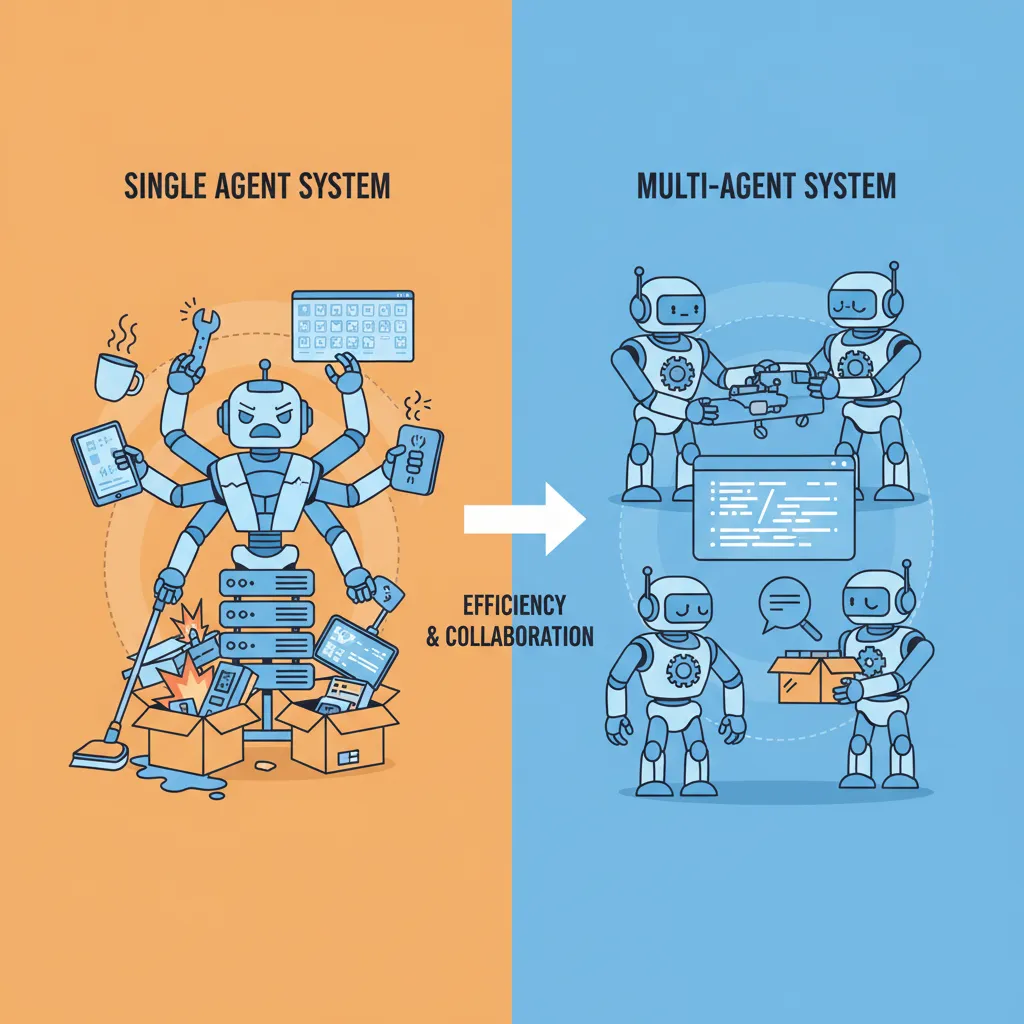
Not every problem needs a multi-agent system. Adding agents introduces coordination overhead, increased token costs, and debugging complexity. Here is a practical decision framework.
Use a single agent when:
- The task is well-defined and repetitive (e.g., summarizing documents, answering FAQs)
- You need low latency and predictable costs
- The problem domain is narrow enough for one model to handle
Use multi-agent systems when:
- The problem spans multiple expert domains (e.g., legal review + financial analysis + compliance check)
- Tasks can be parallelized for speed gains
- You need cross-validation — one agent checking another’s work reduces errors
- The workflow requires dynamic decision-making rather than fixed sequential steps
As Markus Müller from ML6 puts it: “Complexity should exist for a purpose, not for novelty.” Start with the simplest architecture that solves your problem, then add agents only when you hit clear limitations.
Real-World Multi-Agent AI Use Cases
Travel Planning System
A travel planning agent system demonstrates multi-agent coordination well. Separate agents handle flight booking, hotel search, ground transportation, and activity recommendations. The orchestrator merges all results into a cohesive itinerary while respecting constraints like budget and timing.
AI Tumor Board (Healthcare)
In healthcare, multi-agent systems show serious promise. An AI tumor board uses specialized agents for diagnostic imaging, patient history analysis, treatment planning, and drug interaction checking. Each agent brings domain expertise that would be impossible to fit into a single model’s context window.
Customer Operations
Enterprise customer support benefits from multi-agent routing: a triage agent classifies incoming tickets, a sentiment analysis agent flags urgent cases, and specialist agents handle billing, technical support, or account management. This mirrors how human support teams already work.
How to Choose the Right Multi-Agent AI Framework
Picking a framework depends on three factors: your team’s experience, your deployment target, and how much control you need.
| If you need… | Choose |
|---|---|
| Fastest time to production | CrewAI or Agno |
| Maximum workflow control | LangGraph |
| Enterprise / .NET support | AutoGen |
| Learning multi-agent concepts | OpenAI Swarm |
| AWS-native deployment | Agno |
| Largest integration ecosystem | CrewAI |
Getting Started Checklist
- Define your agents: What roles do you need? What tools does each role require?
- Map the workflow: Is it sequential, parallel, or conditional? Sketch it out before coding.
- Pick your LLM: GPT-4o, Claude, or open-source models — most frameworks are model-agnostic.
- Start small: Build a two-agent system first. Add complexity only when needed.
- Add observability: Log every agent action. Debugging multi-agent systems without logs is painful.
FAQ
Do I need multi-agent AI for my project?
Probably not — at least not initially. Most AI applications work fine with a single well-prompted agent. Consider multi-agent only when your tasks span multiple domains, need parallel execution, or require agents to cross-check each other’s work. Start simple, then scale up when you hit real limitations.
Which open-source multi-agent framework is best for Python?
CrewAI is the most popular choice for Python developers building production applications, with 700+ integrations and enterprise adoption from companies like Oracle and Deloitte. For more control over workflow logic, LangGraph offers graph-based orchestration within the LangChain ecosystem. For quick prototyping, Agno has the lowest barrier to entry.
How much does it cost to run a multi-agent AI system?
Costs depend on the number of agents, the LLM you use, and how many tokens each interaction consumes. Multi-agent systems typically use 2-5x more tokens than single-agent approaches because agents communicate with each other. Using smaller models for simple agents (like routing) and reserving larger models for complex reasoning agents is a common cost optimization strategy.
Can I mix different LLMs in a multi-agent system?
Yes — and you should. Most frameworks support model-agnostic agent creation. A practical pattern is using a fast, cheap model (like GPT-4o-mini or Claude Haiku) for simple tasks like classification and routing, while reserving more capable models for complex reasoning or content generation.
What are the main challenges with multi-agent AI systems?
The biggest challenges are debugging complexity (tracing issues across multiple agents), cost management (more agents means more API calls), latency (agent-to-agent communication adds overhead), and reliability (each agent is a potential failure point). Good observability tooling and careful architecture design mitigate most of these issues.
Bottom Line
The multi-agent AI framework landscape in 2026 offers strong options for every use case. CrewAI leads for production teams wanting batteries-included tooling. LangGraph wins when you need precise workflow control. AutoGen serves enterprise-scale distributed systems. Agno gets you from idea to deployed prototype fastest. And OpenAI Swarm remains the best way to learn the fundamentals.
The key insight is that multi-agent is not always better — it is better when the problem demands it. Start with the simplest architecture that works, pick the framework that matches your team and deployment needs, and scale from there.
Product recommendations are based on independent research and testing. We may earn a commission through affiliate links at no extra cost to you.